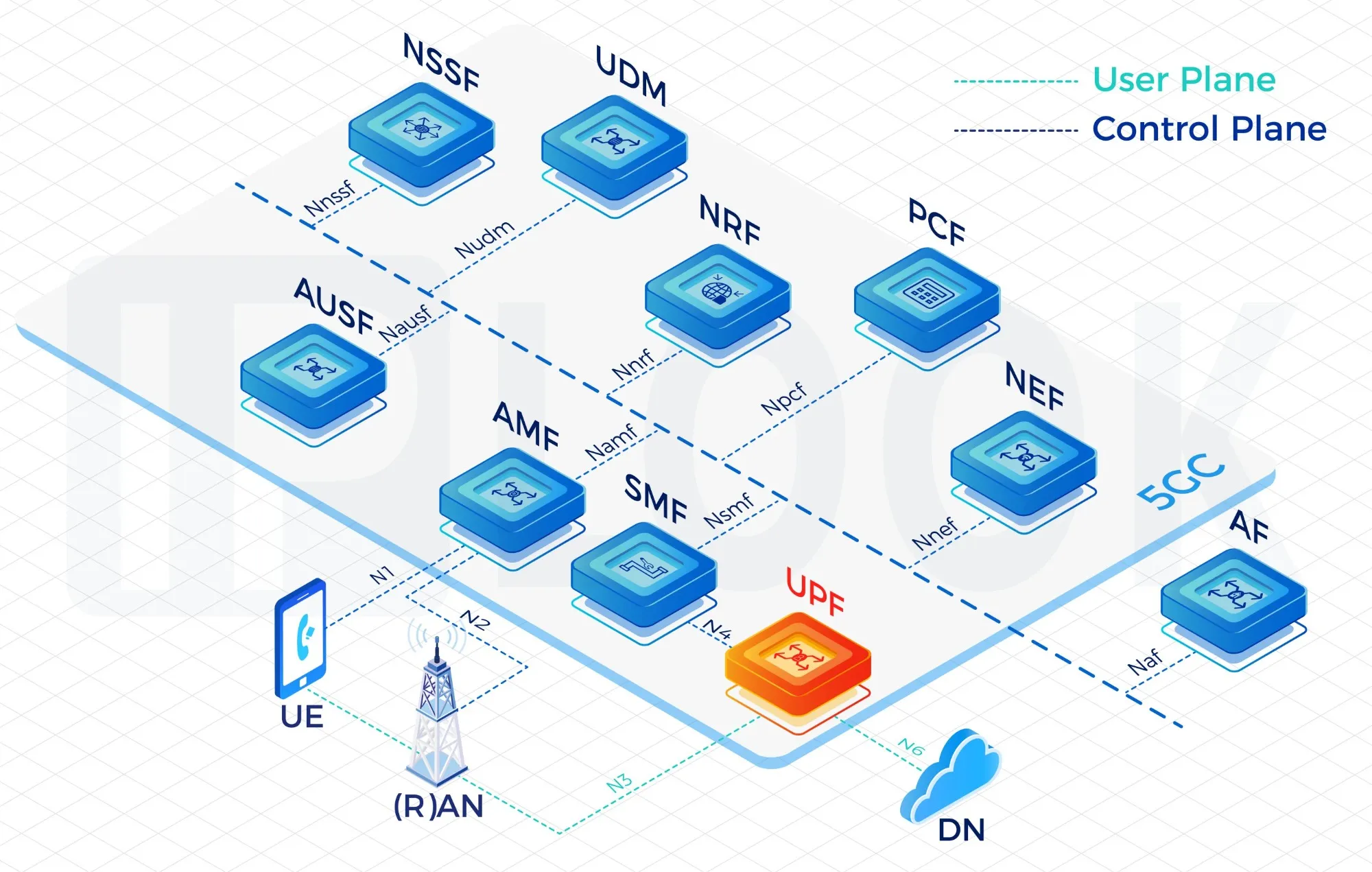
Our High-Performing Core Network
Fully virtualizable on VMware, K8S, Docker and OpenStack containers
User Plane Function(UPF)
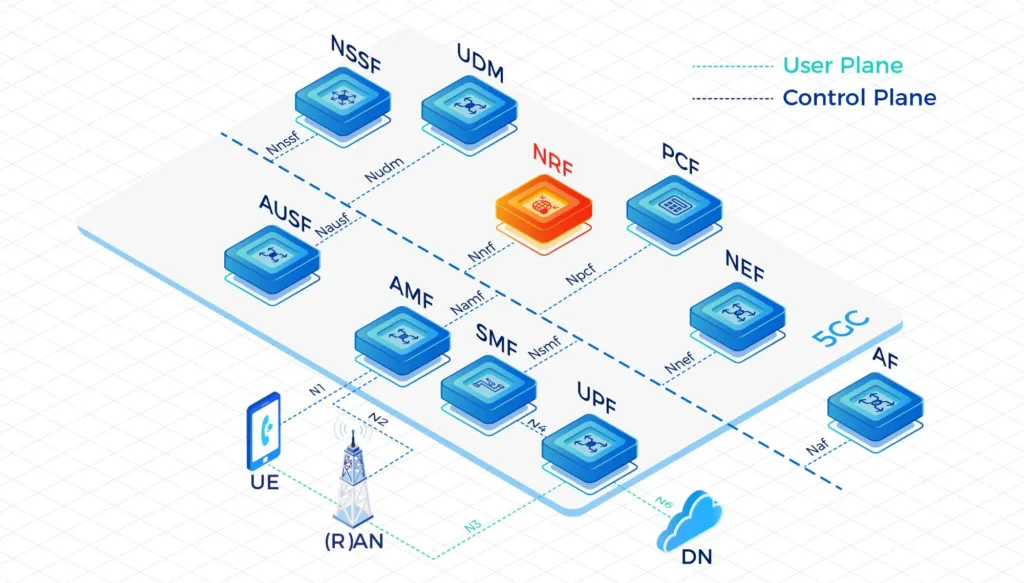
The User Plane Function (UPF) represents the data plane evolution of a Control and User Plane Separation (CUPS) strategy, which is a fundamental component of the 3GPP 5G core network(5GC).
The UPF plays the most critical role in the process of data transfer. It provides the interconnect point between the mobile infrastructure and the Data Network (DN), i.e. encapsulation and decapsulation of GTP-U.
Key Benefits

Fully Virtualized, Highly integrated, Cloud Native UPF

Perfect compatibility with third-party core network elements

5GC UPF Multi-Gbps support: 10GB/25GB/40GB/100GB

Enabled for centralized or distributed data centers

Highly scalable
Enable to deploy on Cloud Platform such as AWS and Azure

High performance, low cost solution
Single instance throughput is up to 100Gbps
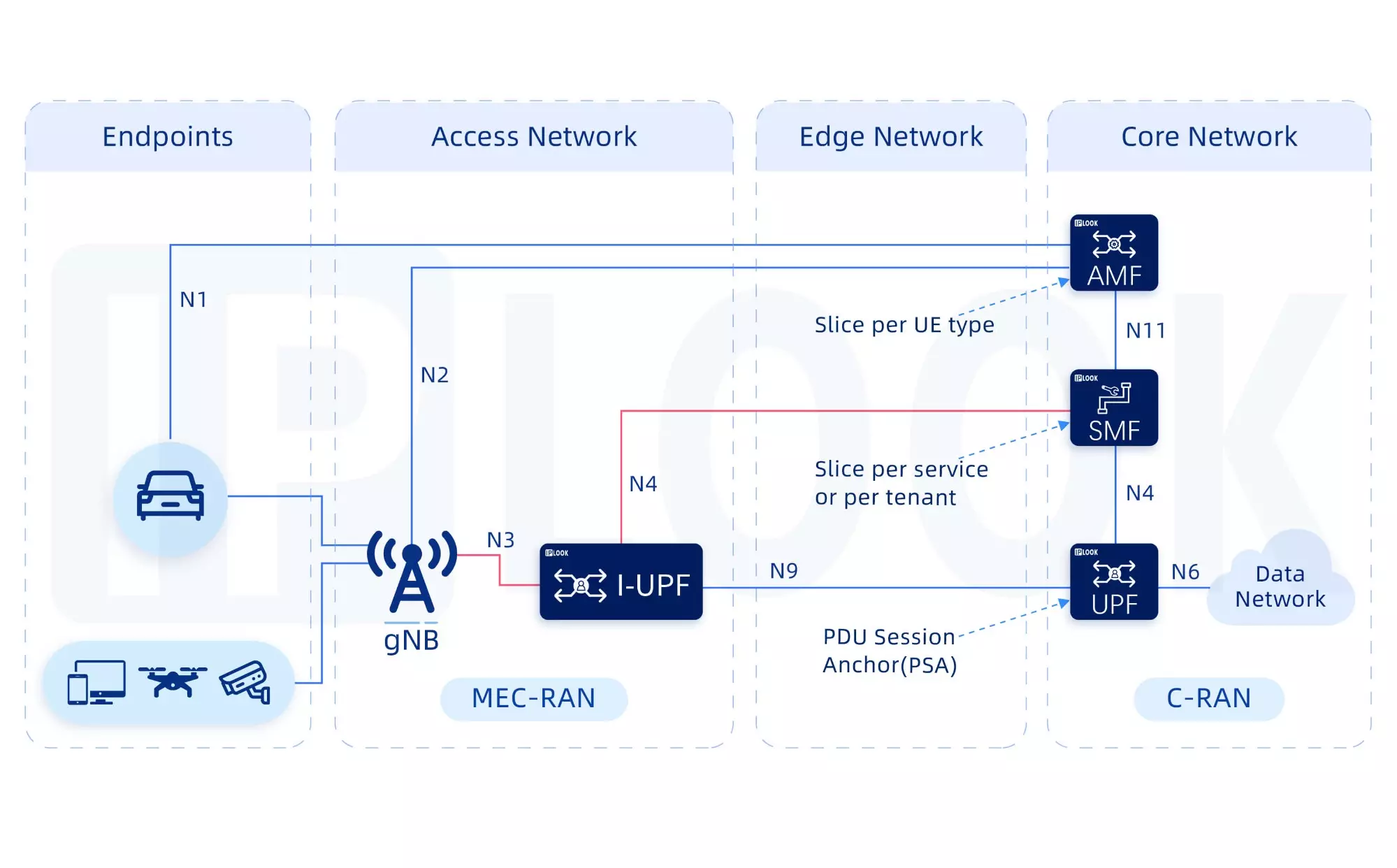
IPLOOK's Most Scalable, High Performance UPF
- The IPLOOK UPF has been designed to be distributed and virtualized in 5G and offering better that 4G EPC which was designed to be more centralized in the mobile core network and running on COTS server. UPF can be co-located in the new emerging cloud edge data centers.
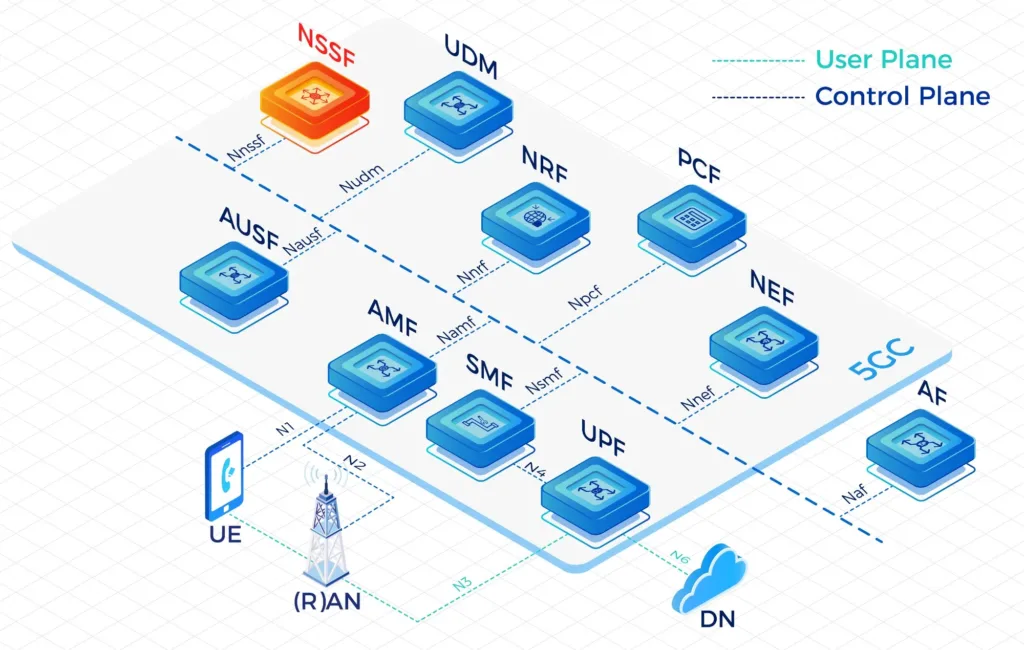
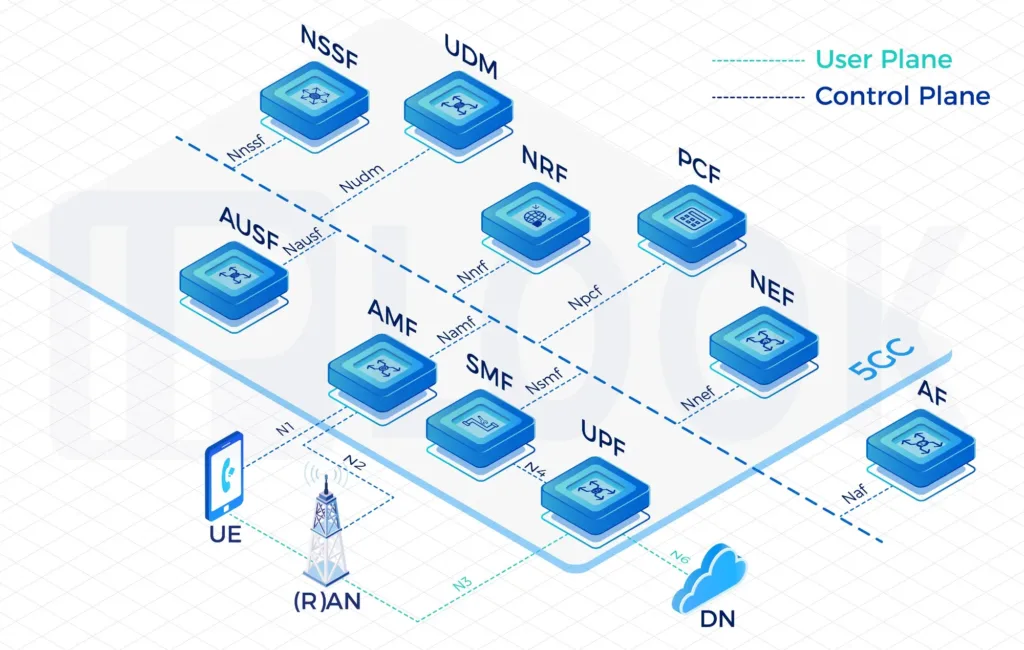
- Data transfer process in 5GC though UPF:
Firstly, the data is sent by an terminal equipment, which will be transmitted over a wireless channel to gNodeB. Then, the gNodeB encapsulates the user data into GPRS Tunnelling Protocol for the user plane (GTP-U) packets. Here comes the most important part, the User Plane Function(UPF) receives users’ data from N3 interface and then sends them to the DN. - IPLOOK‘s Standalone UPF within its 5G Core Network(5GC) enables serving both 4G and 5G Radio Access Networks(RANs). Single 5GC UPF instance throughput is up to 100Gbps.
Video Series
Features
Comply to 3GPP R15/R16 Standards
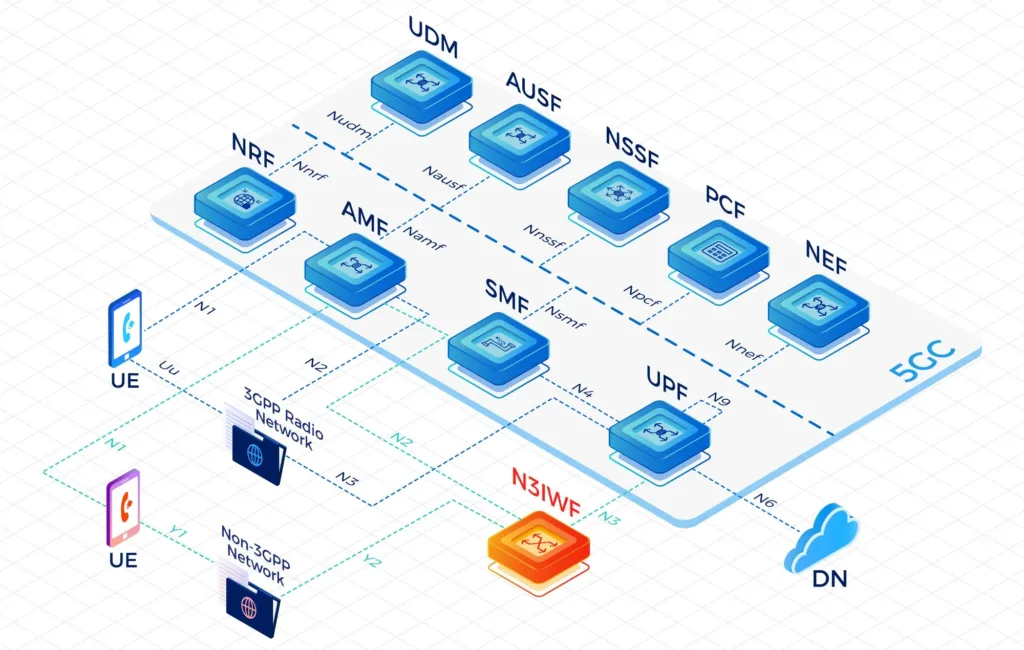
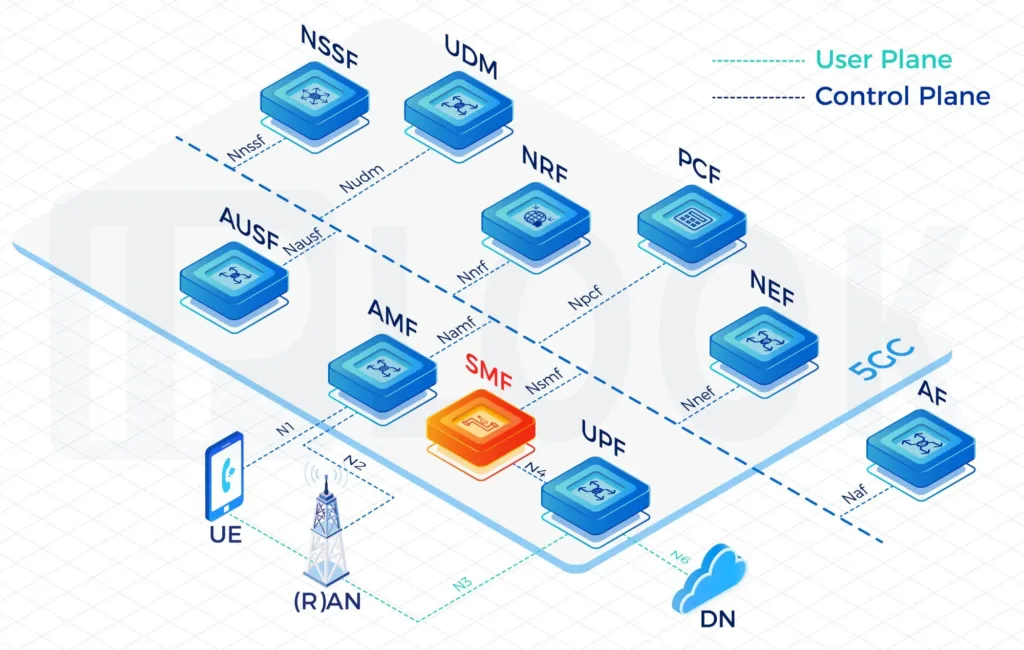
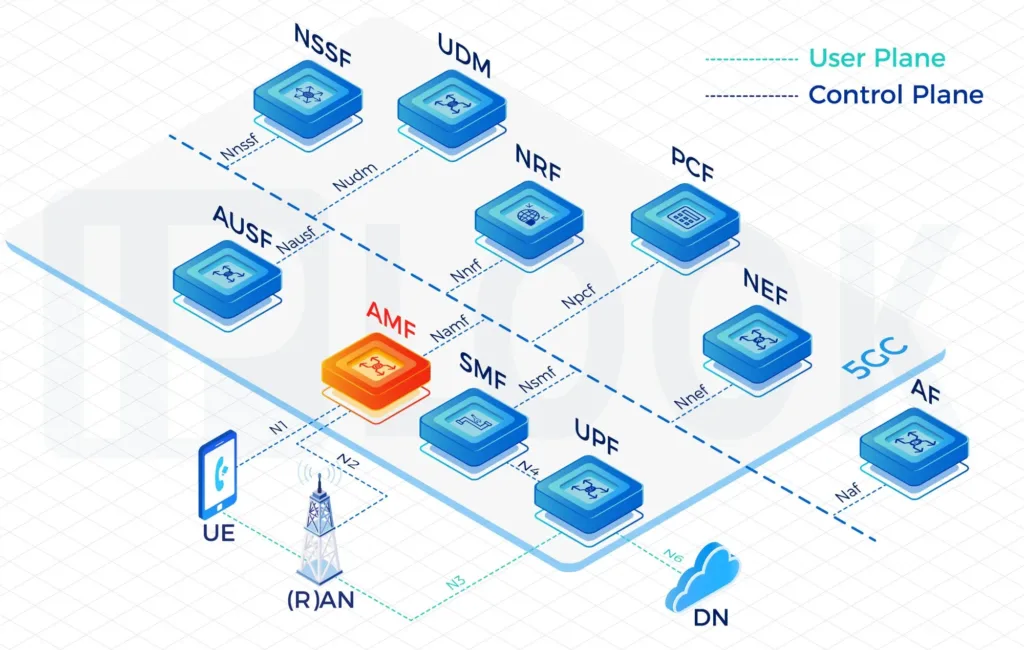
Four distinct reference points:
- N3: Interface between the RAN (gNB) and the (initial) UPF
- N9: Interface between two UPF’s (i.e the Intermediate I-UPF and the UPF Session Anchor)
- N6: Interface between the Data Network (DN) and the UPF
- N4: Interface between the Session Management Function (SMF) and the UPF
IP Protocol Stack Basic Function
- ARP
Routing Function
- Static Routing
- Direct Routing
- IP Policy-based Routing
- Routing Policy
Distributed Packet Core Basic Function
- Supporting SSC Mode 1
- Supporting SSC Mode 2
Basic Service Function
- Session Management
- Path Management
- Data Forwarding
- Address Assignment
- User Plane Address Assignment
- QoS and Traffic Management
Element Management System(EMS) supported
IPv6 Basic Function
- IPv4/IPv6 Dual Stack Access
- IPv6 Networking on Gi/SGi/N6
Availability Function
- DDoS Attack Proof
Operation and Maintenance
- KPI Management
- Fault Management
- Log Management
- Configuration Management
- License Management
- Security Management
- Tracing Function
- Online Support
- Online Loading
- SSH
- Availability
QoS Management Basic Function
- Supporting Reflective QoS
Basic Charging Function
- Time Based Charging of Service
- Volume Based Charging of Service
Charging Mode
- Offline Charging
Open Northbound interface and graphical web based management interface
- API
- RESTful
FAQ
What is the primary role of the UPF in a 5G Core (5GC) network?
The User Plane Function (UPF) is primarily responsible for forwarding and routing user data, acting as the gateway between the Radio Access Network (RAN) and the Data Network (DN). It realizes the separation of the control and user planes (CUPS), allowing for more flexible traffic management.
How does IPLOOK UPF support low-latency applications like MEC?
Compared to traditional EPC architectures (SGW-U/PGW-U), our 5GC UPF can be "sinked" or deployed closer to the network edge. This proximity reduces transmission distance, meeting the demands of large-bandwidth and low-latency business scenarios like Industrial IoT.
What are the maximum throughput and user capacity limits?
The IPLOOK UPF is highly scalable, supporting concurrent user capacities from 1,000 to 5,000,000. It delivers impressive data throughput ranging from 1Gbps up to 400Gbps depending on the configuration.
How does the system guarantee 99.999% reliability during hardware or process failures?
We utilize process-level session backup, where session data is restored from the database to continue forwarding even after a restart. Additionally, our active and standby disaster recovery ensures an automatic switching time of ≤ 10 seconds.
What virtualization platforms are compatible with IPLOOK UPF?
Our UPF is designed for cloud-native flexibility, supporting server bare metal, KVM virtual machines, Kubernetes (K8s), and OpenStack. It can be fully managed via the MANO platform.
Can the UPF perform deep content analysis and per-application billing?
Yes, through integrated DPI (Deep Packet Inspection) technology, the UPF can parse services and identify specific protocols. This allows for fine-grained QoS control and content-based billing at the application or service data flow level.
How does IPLOOK UPF handle network security and DoS attacks?
The system includes robust security features, such as DoS/DDoS attack protection, overload protection, and support for ETSI-compliant lawful interception interfaces.
What are the hardware resource requirements for different traffic loads?
Small scale (10k users / 2Gbps): Requires 8C CPU and 16GB RAM.
Carrier scale (1M users / 200Gbps): Requires a cluster of 10 × (40C CPU, 64GB RAM).